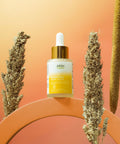
"How to make natural face wash" is searched tens of thousands of times a month in India, and the traditional answer is a good one: besan, ubtan and oats have been used as face cleansers for centuries. This guide gives three recipes that are safe for most skin, explains what a home paste does and does not do, lists the ingredients to keep off your face, and is honest about when a formulated natural face wash does the job better.
What a face wash has to do
By evening, the face carries sweat, sebum, dust, sunscreen and the day's pollution. Water alone removes the sweat and some dust. Oil, sunscreen and grime need a surfactant, an ingredient that lets oil mix with water so it rinses away. Soap is the oldest surfactant; modern face washes use milder ones. Home pastes mostly work by mild abrasion and absorption instead: flour and clay soak up oil and lift surface dirt as you rinse them off. That is why they feel refreshing, and why they do not fully remove sunscreen or heavy sebum.
Three home recipes that are safe for most skin
1. Besan and curd (oily or normal skin)
Two teaspoons of besan (gram flour), one teaspoon of curd, a pinch of turmeric. Mix to a paste, apply to a damp face, massage gently for a minute and rinse. Besan absorbs oil; curd softens the paste. Use two or three times a week. Skip the turmeric if you are fair-skinned and using it in the morning, as it can leave a yellow tint for a few hours.
2. Oats and honey (dry or sensitive skin)
One tablespoon of oats ground to a fine powder, one teaspoon of honey, enough water or milk to make a paste. Oats are known for being soothing; honey is a humectant that draws water to the skin. Massage lightly and rinse. Suitable for daily use if the oats are ground fine enough not to scratch.
3. Ubtan (dull or tanned skin)
The traditional bridal paste: besan, a little turmeric, sandalwood powder if you have it, and rose water to bind. Apply, leave for five minutes, then wet the fingertips and massage it off in circles before rinsing. Ubtan is the paste Arish's Ubtan Face Wash and Ubtan Face Pack are built on, with turmeric, saffron and sandalwood in a base that rinses clean.
Ingredients to keep off your face
Several things that appear in home face-wash recipes online are regular causes of irritation and dark marks:
- Lemon juice. Acidic and makes skin react to sunlight. Burns and pigmentation are common.
- Baking soda. Strongly alkaline; it strips the barrier in one use.
- Sugar, salt and coffee grounds. Jagged particles that scratch. If you want a physical scrub, a formulated one such as the Glow Secret Scrub uses walnut shell powder milled to a controlled size.
- Toothpaste, raw garlic, vinegar. Irritants with no benefit.
What a bottled natural face wash does differently
A formulated face wash has three things a home paste cannot: a mild surfactant that removes sunscreen and sebum, a pH close to the skin's own so the barrier is not disturbed, and a preservative so the product stays safe for months. "Natural" on a bottle usually means the actives and extracts are botanical, not that there is no surfactant; a wash with no cleansing agent at all would not clean.
In practice many people use both. A formulated wash in the evening, when sunscreen and the day's grime have to come off, and a home paste in the morning or as a twice-weekly treat. Arish's face wash collection is sorted by skin type, with the full ingredient list on every product page: Haldi Neem for oily and acne-prone skin, printed sulphate and paraben free; Gold Face Wash for dry skin; Vitamin C Face Wash with kiwi and kojic acid for skin that looks dull; Pearl Face Wash for sensitive skin.
How to wash your face, whichever you use
- Lukewarm water, not hot.
- A pea-sized amount of wash or a coin-sized amount of paste.
- Massage for 30 to 60 seconds, including the hairline and jaw.
- Rinse fully and pat dry with a clean, soft towel.
- Moisturise while the skin is still slightly damp.
Twice a day is enough. If skin feels tight after washing, the wash is too strong or you are washing too often, and a gentler option will do more than scrubbing harder.